
I was digging through GA4 for a specialty retailer client recently, the kind of pull I do at least once a quarter for every account, and one number stopped me.
Returning visitors made up 20% of sessions.
They made up 77% of revenue.
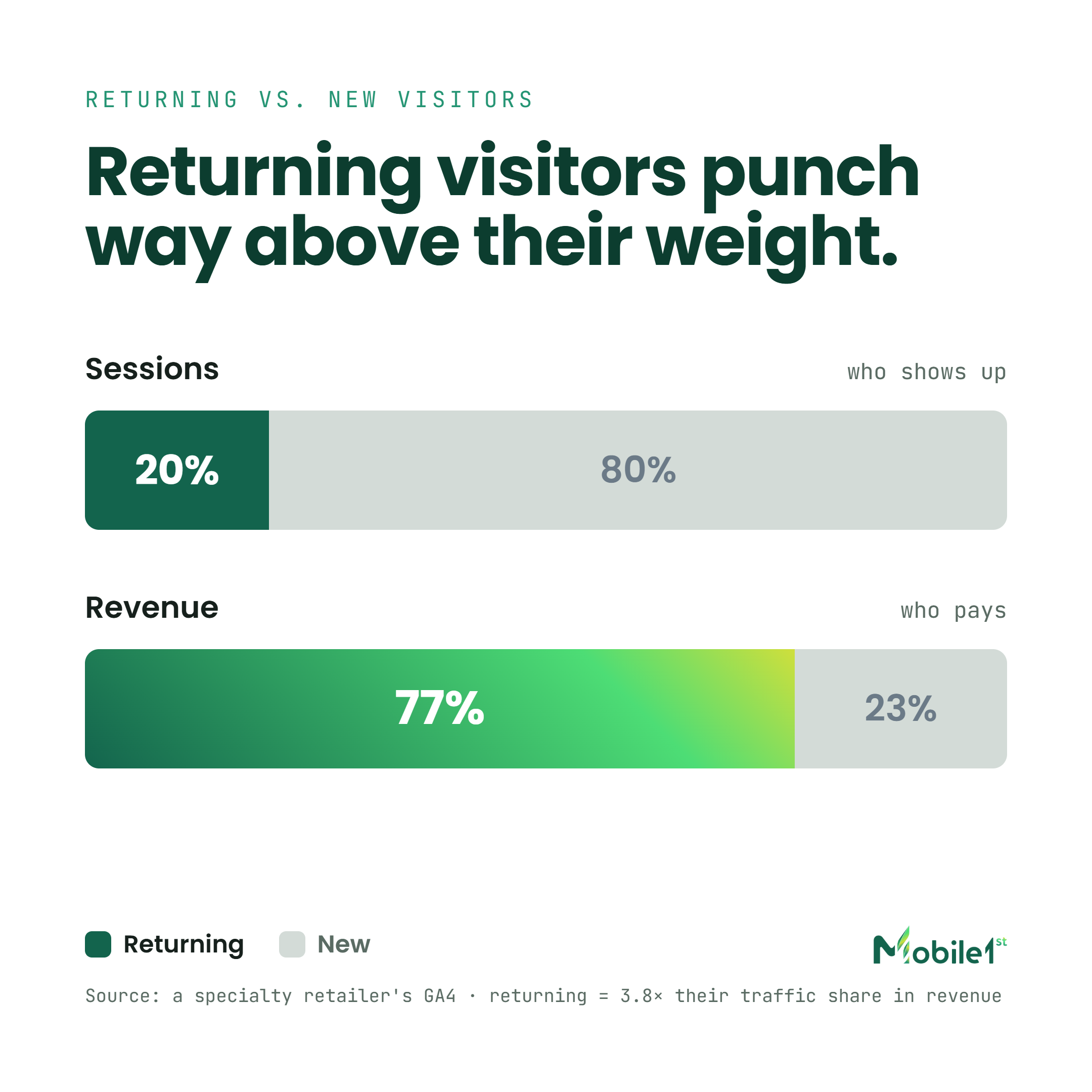
I sat with that for a minute. Every experienced e-commerce person has a rough sense that repeat visitors convert better. But 77% isn't "convert better." That's four out of every five dollars, coming from one out of every five people, and when I asked the team what they actually knew about that 20%, the answer was nothing. No name. No email. No mechanism for anyone to say "hey, it's me again."
Why This Number Gets Ignored
It's easy to miss because it doesn't show up as a problem. Revenue is fine. Conversion rate looks normal in the dashboard. Nothing is on fire.
But flip the number around and it gets uncomfortable. If 77% of your revenue depends on people you can't identify, you don't actually have a customer base. You have a temporary majority of anonymous repeat visits that happens to be propping up the P&L.
Here's the part almost nobody says out loud: the reason people don't identify themselves isn't that they don't want to. It's that you never asked.
Go look at your own site right now. Is there an actual reason for someone to log in before they're ready to check out? Does your homepage know the difference between someone's first visit and their ninth? Most sites are built as if every session is session one, forever, no matter how many times that browser has been back.
What Not to Do About It
The instinct here is to bolt on a loyalty program. Points, tiers, a "Rewards" tab in the nav. I get why. It feels like the obvious fix for "we don't know our customers."
Don't start there.
A points program is a mechanism for retaining people who already identify themselves. It does nothing for the anonymous 20% who are already coming back on their own, without any incentive, and still aren't raising their hand. If people are already returning at that rate without a rewards program, the problem isn't motivation. It's recognition. You're solving the wrong layer of the funnel.
The other wrong move is forcing an account creation wall before checkout. That trades a data problem for a conversion problem.
What Actually Works
Start with the visit, not the transaction. The lowest-friction identity signal is simply knowing someone has been on your site before, even before you know their name. Cookie-based recognition alone lets you shift the homepage and PDP experience for returning sessions: skip the brand-story intro, surface what they were last looking at, tell them what's changed since they left. None of this requires a login. It just requires building two versions of the top of the funnel instead of one.
Make the entry discount earn its keep. Almost every brand already runs some version of "10% off your first order." That discount is doing one job right now: buying a transaction. Make it do two jobs. Instead of just an email address, ask for the two or three pieces of information that would actually let you personalize the next visit. For a golf retailer, that's handicap, how often they play, and what driver is already in their bag. For a skincare brand, it's skin type and the one thing they're trying to fix. For a supplement company, it's the specific outcome they're chasing. You're not making the discount harder to get. You're making it smarter. Same conversion event, but now you walk away with a customer profile instead of just an email address.
Use the membership program you already have, don't build a new one. If you've already got a Players Club, a Rewards tier, a VIP list, anything with an account behind it, that's your on-ramp. Most of these programs collect a name and maybe a birthday and call it done. Rebuild the signup flow to ask two or three real questions at the moment someone's already motivated to join, not buried in a "complete your profile" page nobody visits later. The membership program was never the problem. The account creation flow inside it was.
Consider putting a quiz at the front door, not the back. Most DTC brands already do this, a short quiz as the actual first touch, before any product grid. Sporting goods and specialty retail rarely do, and there's no obvious reason not to test it. Someone lands on the site, answers four questions about how they play or what they're solving for, and gets routed to the right products instead of a generic category page. It's a bigger swing than the other three, worth treating like a real experiment rather than a redesign: run it against your current homepage for a segment of traffic, and see what it does to conversion and to how many people hand you usable data. And don't ignore the signal that's already free: reviews and sizing feedback often contain the exact detail you'd otherwise have to ask for. Most brands just aren't looking.
The Real Ask
You don't need to solve identity for 100% of your traffic. You need to solve it for the 20% who are already proving, with their wallets, that they're coming back.
Pull your own GA4 numbers this week. Compare session share to revenue share for returning visitors. If the gap surprises you, you're not alone. Almost every brand I've looked at has some version of this.
If you disagree with any of this, send me an email and tell me why.