
I spent a long weekend checking Instagram every hour.
Not for friends. Not for memes. For a race.
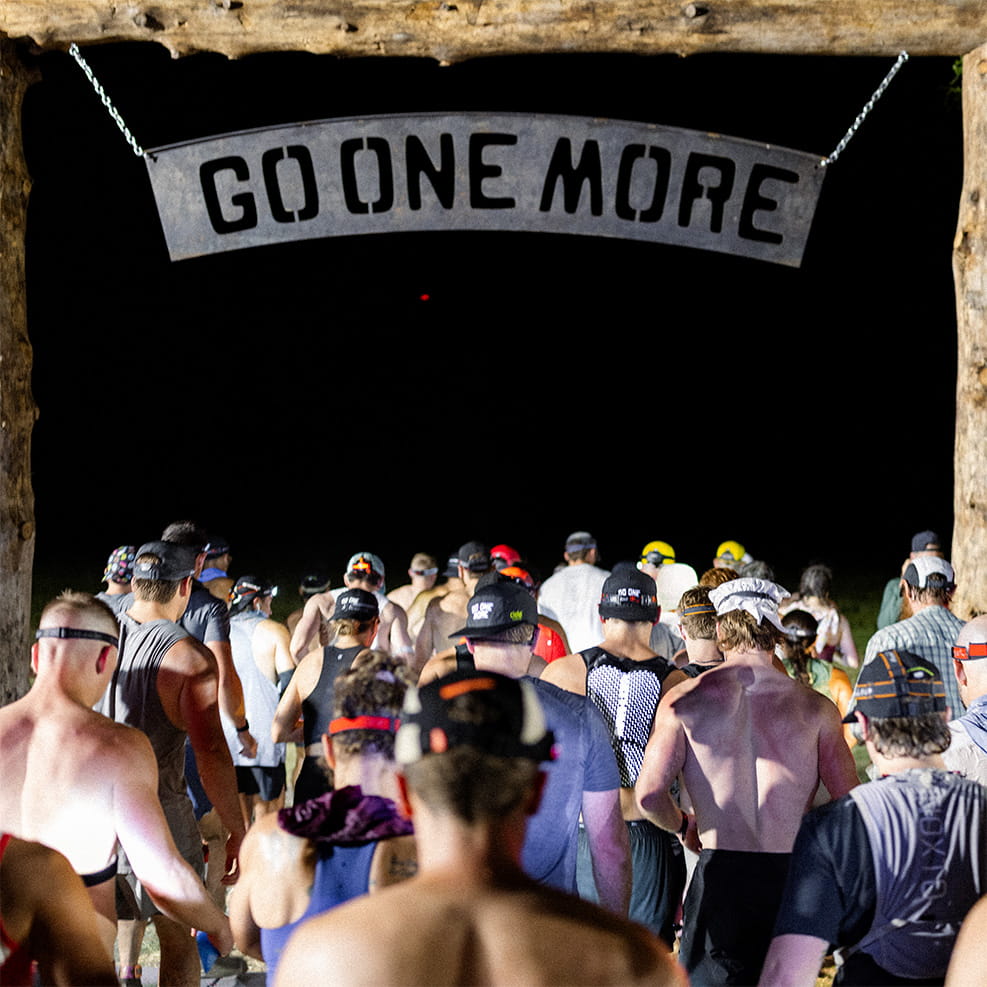
Specifically, the Go One More Backyard Ultra Marathon, held just outside Austin at Nick Bare's ranch. I found out about it through a few fitness influencers I follow. Didn't plan to get hooked. And yet, every hour on the hour, I was opening Instagram to watch the BPN live stream, scanning faces to see who lined up for the next lap and how they looked.
After searching for Bare Performance Nutrition ten times in a single weekend, I just followed them.
What Is a Backyard Ultra?
If you don't know the format, here's the short version: competitors run a 4.2-mile loop every hour, on the hour. You keep going until you're the last one standing.
On paper, it sounds manageable. 4.2 miles? Anyone can walk that in an hour.
In reality, you're competing against athletes who've lasted over 72 hours and covered 280+ miles, still running. Every lap you complete, you have to start the next one. Miss the start gun and you're out. There's no finish line. The goal is just to go one more.
Who Is Bare Performance Nutrition?
If you've been to a grocery store lately and hit the supplement aisle, you've probably seen BPN. Protein powders, pre-workout, electrolytes, creatine. They sell DTC but have made their way into HEB, Vitamin Shoppe, Scheels, and Central Market.
I've tried the protein. It's solid. But honestly? I'm not sure it's meaningfully different from the 15 other options sitting next to it on the shelf.
Nick Bare founded the company in 2012 out of a college apartment in Indiana. $20k loan, no experience, a lot of grit. He went on to serve as an Army infantry officer, completed Ranger School, ran 100-mile ultras, competed in bodybuilding. His book, Go One More (a New York Times bestseller), captures the philosophy behind all of it: growth is a choice, decisions compound, and the only way forward is to go one more. One more rep, one more mile, one more hard decision.
The race is the book. The book is the brand. The brand is the man.
What I Kept Thinking About
The runners in that race aren't just customers. They're expert users. Not necessarily of BPN specifically, but of the entire category of products BPN competes in. These are people who have spent years dialing in their nutrition. They know what works at hour 30. They know the difference between a product that holds up and one that doesn't. If you want to know how your electrolytes perform under real duress, ask someone who's been running loops since Friday.
These athletes are the power users. The ones who have developed real opinions.
And every one of them has their own audience. Their own following. Their own community that watches them train, race, and document the whole thing. That audience followed the race. That audience watched the BPN live stream. That audience searched for BPN, probably the same way I did.
BPN didn't sponsor a runner. They brought the runners together.
The Community Problem Everyone Shares
Every e-commerce team worth anything is trying to build community. The reasons are straightforward: community reduces customer acquisition costs, increases LTV, generates organic content, produces reviews, and creates a base of loyal buyers who aren't just waiting for a promo code.
We all want followers who actually care. We want customers who talk about us without being asked. We want the kind of brand attachment that doesn't disappear when a competitor runs a better ad.
Most of us are trying to build community for the masses: something everyone can participate in. A hashtag campaign. A loyalty program. A Facebook group. A Discord.
And most of us find it hard, because it is hard. It takes real work to build a community from scratch around something people can join but don't have a strong reason to.
BPN flipped this.
They didn't try to build a community for everyone. They built an event for the experts and let everyone else watch.
The Expert-Audience Model
Think about what actually happened here.
The competitors in that race are the most credible validators BPN could ever have. They're not influencers paid to hold up a shaker bottle. They're ultra-endurance athletes actively testing their nutrition at the extreme end of what a human body can do.
Meanwhile, every fan of those athletes (and there are thousands of them) is watching the BPN live stream. Not because they were targeted with a Facebook ad. Because someone they already follow is competing, and the race is compelling enough to check back every single hour.
At one point I opened the stream and over 15,000 people were watching. On a brand Instagram account. For a supplement company. Who wouldn't want that kind of viewership?
The experts are the show. The masses are the audience. And the brand owns the stage.
Sponsorship vs. Ownership
Sponsorship deals have always done something similar. Brands attach themselves to elite athletes or events because the association carries credibility.
But there's a key difference: sponsorship rents the stage. Running the event owns it.
When you sponsor a race, people watch the race. Your logo is in the background. The narrative belongs to the event organizers. You get impressions but not identity.
When you host the race, on your founder's ranch, with your brand name in the title, with your team running the live stream, the event and the brand become inseparable. People don't search for "that ultra marathon." They search for Bare Performance Nutrition.
Even if every competitor isn't sponsored by you, they are now a part of your community.
What This Looks Like for Other Brands
You don't need an ultra marathon. You don't need a ranch outside Austin. You just need to ask: who are the most expert users of products in my category, and how do I bring them together in a way that's worth watching?
Sell gear for fly fishing? Don't just send influencers to Montana. Bring the top 20 guides in the country together for a weekend on a legendary stretch of river. Stream it. Own the content.
Sell outdoor apparel? Gather elite mountaineers to summit something together. You don't need to sponsor it. You need to create it.
Sell radiators? Host a car show with the top cars in your area.
You don't need your brand to be the only brand represented. Other brands will be there. That's fine. The experts will use what they use. What matters is that you are the one who brought the experts together. People will appreciate that.
People will become part of your community because you gave them something worth gathering around.
So What Do You Do With This?
Most community-building efforts fail because they ask too much of the audience at the start. You're asking people who barely know you to opt in, engage, generate content, and care.
The expert-audience model asks the opposite. Start with the people who are already obsessed: the power users, the extreme adopters, the practitioners who have made your category a major part of their identity. Give them a stage. Make their expertise visible. Create something worth watching.
The masses don't need to participate to become part of your community. They just need to watch something compelling enough that they come back.
Every hour, on the hour.
Related Episode