
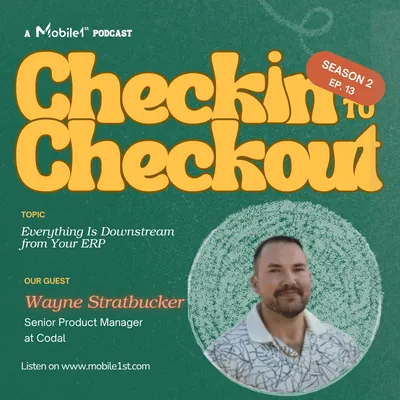
Everything Is Downstream from Your ERP - Wayne Stratbucker
Wayne Stratbucker has seen both sides of the omnichannel equation. He's helped brands sell on Amazon, Walmart, TikTok Shop, and Instagram. He's watched clients try to modernize their frontend while their ERP runs on a green screen. And he's had it with the LinkedIn vaporware parade of "I built a full e-commerce app in a day."
Now, as Senior Ecommerce Strategist at Codel, Wayne works across the full stack of digital commerce — translating business goals into technical requirements, building omnichannel growth strategies, and pushing clients to fix what's broken before chasing what's shiny.
But Wayne's hottest take isn't about channels or platforms.
It's that the e-commerce industry is lying to itself about what AI can actually do today. Vibe coded checkout flows that can't survive an hour of UAT. Apps that look great in a LinkedIn post and fall apart the moment real money touches them. Wayne's argument: if you work in e-commerce, you know what a shippable product looks like. Start acting like it.
We also get into why your ERP is the single most important (and most ignored) piece of your digital transformation, the difference between first party and third party marketplace strategy, how AI is finally breaking down the data literacy barrier so non-technical stakeholders can actually use the insights they've been sitting on for years, and why personalization doesn't require a six-figure platform purchase — just Shopify Flow and some customer tags.
If you're a Director of E-Commerce who's been told to "do personalization" but can't answer basic segmentation questions yet, or you're staring at a backend system from the Clinton administration and wondering where to start — this one's for you.
Want any help Personalizing Every Customer Touchpoint? Check out https://Mobile1st.com
Interested in talking to Justin or getting on the show, find him on Linkedin: https://www.linkedin.com/in/justinaronstein/
Key Topics:
- The difference between first party and third party marketplace strategy — and how margin pressure changes the calculus
- Social selling versus social discovery: what it means to complete a purchase entirely on TikTok, Instagram, or Facebook without ever hitting your site
- Wayne's hot take: vibe coded e-commerce apps are vaporware — and the industry needs to stop pretending otherwise
- Why your ERP is the foundation everything else sits on, and why a green screen backend means you're already a decade behind
- The "2025 Civic with a 1972 engine" problem: how legacy backend systems silently kill digital transformation efforts
- How AI is democratizing data literacy — letting non-technical stakeholders ask questions of GA4 and data warehouses in plain language
- Why companies have more data than ever but aren't using it, and how AI changes that dynamic
- Personalization without a platform: using Shopify Flow, customer tags, and native tools to customize experiences by segment
- The "billboardification" of e-commerce: why there are now 50 options where there used to be 15, and what that means for capturing attention
- Channel-specific demographic targeting: why your TikTok audience and your Facebook audience might need completely different product experiences
- Data compliance and accessibility as non-negotiable foundations — and the $15K–$25K claims that catch businesses off guard
- Extreme Ownership applied to e-commerce leadership: why team failures are leadership failures, and how that mindset reduces churn
Transcript
Justin Aronstein: Welcome to Check In to Check Out. This week we have Senior Ecommerce Strategist Wayne Stratbucker at Codel. Thank you for coming on the show. Really excited to have you. So what's your day to day look like? What are you working on and what do you enjoy about your job?
Wayne Stratbucker: Yeah, excited to be here.
Wayne Stratbucker: Yeah, so my day to day quite has quite a breadth of kind of experiences. So I help primarily I help translate kind of business goals, business functions into technical requirements and things like that also help lead when it comes to growth and strategy, whether that's in the omnichannel space. So think marketplaces, social shopping, stuff like that. And so it kind of, and everything in between there. So my experience kind of comes from being a project manager and having them that product experience. So very kind of technical and help support kind of things from that end.
Justin Aronstein: Awesome, so you just mentioned Omnichannel, including marketplaces and social selling. How are those two different, the same? Because to me, it's all marketplace in some way, but as soon as intricacies.
Wayne Stratbucker: Ha Yeah, I think a lot of it, the easiest way to, in the way that most folks in the industry split it is third party versus first party. And marketplaces versus social is another kind of dimension you can split it by. So you have, when I say marketplaces, you obviously have the big ones. have the Amazons of the world, the Walmarts of the world, even Gap. think a lot of people don't know this, but Gap actually does have a marketplace itself. Then you have like Wayfair, things like that. Yeah, yeah, Gap. If you go online, you can see a lot of the opportunities there and you can kind of see where they have that. my cat is like in the He is very needy. But when it comes to, when it comes to, that's your kind of traditional marketplaces. In B2B, they tend to be much more niche.
Justin Aronstein: I didn't know that.
Justin Aronstein: Awesome, I want to see her.
Wayne Stratbucker: And there's a lot also like expanding in Europe right now as well. So think about a marketplace is essentially a non-owned channel that that you can post your products on and the purchase comes through there. Then within marketplaces, you have first party and third party. First party is where say you sell your products to Amazon, they sit in the Amazon warehouse. Amazon manages the inventory in Amazon. Amazon then sells that. Then you have third party marketplaces where, or I said that backwards, sorry, let me reset it. So your first party marketplace is where you sell on the platform. You have to fulfill the information. basically think of it as an order taker. It's essentially what kind of first party is. Third party is where you allow the marketplace to manage and maintain inventory. They handle logistics, they handle the shipping, but they take, say they buy a pallet of products from you, they put it in their warehouse and then they ship it out. And then you just know when they need to buy another round of inventory or stuff like that. Then we get into social channels tend to be much more B2C focused. So think of your, your Tik TOPs shops, your meta shopping, your buying something on Instagram or Facebook. that is kind of there. And then you kind of have, you have like the Google channels, things like that, that kind of sit in that kind of quasi middle space. But yeah, those all overall, kind of an easiest way to kind of break down omni channel as a whole.
Justin Aronstein: So how is the strategy for like, I wanna know the strategy for growth for each of these, but like for first party Amazon versus third party, is there a difference in strategy to grow in those two channels?
Wayne Stratbucker: it primarily comes down to, how much the business wants to take, at a loss, and what kind of opportunities and things that they want to provide to the end user. think most of the, when you comment on the channel strategy, you first need to understand where your customer is at, where your customer is at, where they're buying, how they're buying the expectations that they have when buying. so for example, if you do first party, obviously you can't. provide, you can't promise things like Amazon Prime, two day shipping, one day shipping, things like that. Obviously you don't have access to the logistics network that Amazon does until the order is placed. And so you have to get your product there or you have to ship it directly to the consumer. Obviously if you do it through third party, so if Amazon buys the products from you, stores it in their warehouse, they then can promise delivery within a day or within two days. So that's a big factor. Also another big factor is the percentage of Take that you want to be able to to allow for the product to have on it obviously They don't build these marketplaces because they're free and Amazon makes money on it, And so Walmart makes money on it, too. So it depends a lot on Logistics how you want it to be delivered there and then also margin a lot of companies, especially When you get into the industries where there is a lot thinner margin, you can then start to see where the omnichannel strategy shifts because of the fact that they don't have as much margin to work with.
Justin Aronstein: Got it. And so social selling, the meta, especially like when I think of meta, think really like meta ads land on page or like within browser. But is there a different strategy that you can take that's more marketplace driven as well?
Wayne Stratbucker: Yeah, so you can, I would say probably the easiest way and what most people have experience with is like when you're on say Instagram and you see a post and in that post there's essentially kind of, there's products tagged in that post. And there's certain levels of obviously the user could, the person could just put the links in the comment or in the post itself.
Justin Aronstein: Mm-hmm.
Wayne Stratbucker: but I'm talking about where they're actually kind of indicating the product in the image itself. That's where you see, that's where social selling kind of comes into effect. It's where basically the user is getting a shopping experience that's seamlessly integrated into their social experience. So they're seeing a social post, they're seeing a post by a company, but in that post, there's products that are tagged in it that the user can then go in. and check out what they could buy. They could complete the transaction on Instagram. They could complete the transaction on Facebook. They could complete the transaction on TikTok. So that's where we, when we talk about social selling, they're actually, they're actually completing the purchase. They're, they're discovering the product and completing the purchase solely on a social channel. They're not going back to your website. They can obviously go back to your website, but that then would no longer kind of be. social shopping, if you will, be more that the discovery was happening onto the social channel. And then the user came back to the own channel and made the purchase.
Justin Aronstein: I love it. So that was a great breakdown of those. Kind of thinking more broadly about e-commerce, what is your hot take that will help e-commerce operators in the future? Actually, let me rephrase that. What's your e-commerce hot take?
Wayne Stratbucker: Yeah, I would say probably my hot take right now with AI coming around and everything is that the, everybody's posting, I've built this app and a day and vibe coded it. And this is ready to go and you can sell on it. It's a lot of vaporware. It is a lot of people posting things just to post things. but what, where it kind of comes down to where my frustration is and kind of where the hot take is originated from is that. Every day businesses think that that's reality. and that frequently is not, especially when you're talking about legacy systems, you're talking about all this other complex complexities, that are not really taken into consideration. so my hot take would be, as an industry, we need to stop. kind of selling vaporware and selling this idea that this is truly baked and it's ready to go. Sure, you can use AI to create features and components and functionality and it's great for that. It's where people are saying, this is a fully fledged app that has checkout on it and it has all these other functions that are critical and vital. And really if someone UAT'd that within the first couple hours of UATing it, it would fall apart. And so that's really where my hot take is, is e-commerce experts, we all know what is an actual shippable product. And so we need to stop kind of putting out into the ether, especially on social media, that we've created these vibe coded shippable products that truly are not. If they had to do, if they had to do one thing or two things, then I think they would start to fall apart. yeah, definitely.
Justin Aronstein: Yeah, and I think what you're saying is don't ditch Shopify and rebuild your own e-commerce platform from scratch. Even though it's possible, you probably shouldn't do that.
Wayne Stratbucker: My thing is that I don't think it's really functionally possible yet. think obviously who knows in five years, I this this may age horribly, but at this point in time, the levels of complexity and things like that that you need to have for a lot of these core functions of a business scalability. mean, that's the all of these things are baked into these platforms. I don't think that anybody is going to be coming down. down the pike anytime soon. And really kind of being like, I took my enterprise Shopify store that was doing a 10 million a year online and I moved it onto a vibe code and app that has all of the payment functionality and all of my performance is exactly the same. That's not, that doesn't happen. That's not reality. And so there's a lot of people that will tell you that that's reality. Those are the same people that tend to be, tend to be really focusing on the pretty things and not focusing on what people in the e-commerce industry have to focus on, which is getting things to work and work properly and be secure. Because you are handling sensitive information when you're on e-commerce. You're handling credit cards, you're handling payments, stuff like that. There's a reason why these things, why platforms have been around for a while. I just don't think that you're going to really, this vaporware of, AI can do everything for you now. I think it's, falls flat on its face. The moment you peel the first layer of the onion back, and you start to look at the functionality and it's like, yeah, this is, this is a, this is a whole lot of a nothing burger right now. So, that would be my hot take right now. And probably a lot of people on LinkedIn are not going to agree with me on that, but I, am, I'm sorry. I've yet to see someone have a fully functioning full-fledged app that can do end to end, purchasing and everything like that. that is secure and that is scalable just doesn't exist.
Justin Aronstein: Yeah, that takes piping hot. As someone who has built their own e-commerce platform 15 years ago before AI existed, I know the difficulties of doing it. And it's friggin' hard. There's a lot of things you have to really look out for. And the bar was much lower than, like, sites could be slow and no one cared. And now there's an expectation of speed, and Shopify handles a lot of that. So yeah, I agree that you're not just going to be able to... an e-commerce platform. But I do think you could, if you want to, I'm not saying it's worth it, there's things you could build for your internal processes.
Wayne Stratbucker: Absolutely. Things that are like, don't get me wrong. I don't want this to come off as someone that, I mean, use Claude co-work constantly. It is a great tool. AI does have incredible ability to synthesize data. And I think where AI really is going to start to kind of make a turn is through assisting people that are not as data literate to... harsh through data and to get insights out of that data. I think that's a great opportunity for AI. I things like cowork are changing the game. I think I want to be extremely clear and explicit where I'm saying from beginning to end, you can create an app in one day that can take $50,000 in credit cards in that same day and be completely secure. That just, that's not going to happen. That doesn't exist now.
Justin Aronstein: totally.
Justin Aronstein: And your point on being data literate is amazing. I think one of the problems in e-commerce in the past three or five years has been GA4 is more difficult to use than universal analytics. Totally. And it's so much harder, But now with Claude and a Composio set up into GA4, you can literally just type in your hypothesis and say, hey, is this true? I want to see data that does this. Give me a graph. 45 minutes, what would it take in hours and hours of like,
Wayne Stratbucker: Mm-hmm.
Wayne Stratbucker: Mm-hmm.
Justin Aronstein: putting it together and putting three or four graphs together, you have like basically a deck there like, yeah, you wanna go check the data and make sure there wasn't any hallucination, but it's amazing how easy it is to analyze data now in a way that it just wasn't.
Wayne Stratbucker: yeah. Definitely evangelizing insights to non-technical users. think there was always a scenario where the data folks at companies, especially if you're a larger company, were kind of the gatekeepers of insights because they had to throw it into a SQL database and run all these queries and do all this stuff and clean up the data. Now you can do that with just normal human language. You obviously, like you said, you have to be considerate of AI hallucinates at times and you need to take things with a grain of salt and you need to be constantly kind of suspicious and just kind of double check, make sure everything's good. Have a little bit, healthy amount of suspicion when it comes to when you use AI. But I do believe from what I've seen and what I've used with it,
Justin Aronstein: Hold on.
Wayne Stratbucker: and how I've seen clients working with it. think that that is, that is the tide is starting to turn where data is only accessible to the most technical people. And then they have to distill it into information from there. think that data now is going to start to evangelize data and people can start. mean, what was it? Maybe five, seven years ago, everybody, everything was data. Everybody was obsessed with data, data, data, data. We need data, get the data. Well, A lot of companies have data, they're just not using it. And so I think that is a huge thing. And I think that's where AI can really jump in and kind of help, like I said, once again, evangelize the data to various stakeholders that are not technical so they can make business decisions based off of the data that they have.
Justin Aronstein: that's such a good, like, being able to look at the data and not have to use, like, I worked at a company that had a data team of four people, that their job was literally just to write SQL queries and do the, find the insights that some executive was like, I want to see how this looks. I want to see how this looks. And they weren't, they were providing value, obviously, but they weren't at the ones asking the questions, even though they were the ones closest to the data.
Wayne Stratbucker: huh.
Wayne Stratbucker: Thanks.
Justin Aronstein: anyone can ask a question, the data and get an answer. And that's such a change of what it was and so powerful. So like if you're in the e-commerce, you should be saying, how do I understand my data? Whether it's GA4 or hopefully a data warehouse to really understand what is the profitability of my company and like just go and use AI for that. I think it's an amazing insight. And it's funny when I dropped my daughter off at school, say, every morning she's four, I say be skeptical. And I think when you're using AI, need to be skeptical. It's amazing. I use it every day. Be skeptical. So I love that. people need to be using really, really digging in. So kind of thinking in back in your career a little, have you had any memorable failures? We all are great talking about our successes.
Wayne Stratbucker: Yeah.
Justin Aronstein: I enjoy reveling in my own failures. I don't see my LinkedIn profile, but it's only failures. So just to help people that are on this journey that are failing every day, because we all do, because we're human, anything that you can harken back to that you remember?
Wayne Stratbucker: Yeah, I have kind of one memory that's kind of etched into my memory is really just kind of, it was a client that we were, I was working with and we had a lofty goal. after doing some discovery, we found out that their ERP was for lack of a better term, ancient, literally green screen UI, like we're talking old school. Obviously their users were very used to using it because they were trained up on it and everything like that. There's no navigation, there's no UI, there's nothing. It's literally a database and you're querying that. We had kind of a lofty goal to be able to integrate that into a SaaS solution so that at least the front end of the customer's experience would be kind of leveraging some kind modern technology. Long story short, basically we just ran into so many roadblocks with the ERP and the backend systems and it just couldn't handle the volume. needed to move data back and forth and transition things. I think one of the lessons that I kind of learned out of that, because I think everybody does fail, but if you're not learning those lessons that come out of that failure, then the kind of failure was a little pointless. And so
Justin Aronstein: Yes. Yes.
Wayne Stratbucker: I think one of the big things is that I think if I could give information to those that are listening is that you really need to kind of do the homework ahead of time when you're doing digital transformations. Digital transformations at companies are hard. They are extremely hard. They require a lot of investment and time, money, personal resources, people resources. And I think that the... You can't skimp when it comes to backend systems as someone that works primarily on the front end of a customer experience. think the, if you have a backend system that cannot handle the modern needs of a website today, you're 10 years behind right now. And you, you, you have to modernize these systems. know no business. likes to sign a $500,000 check to get a new ERP put in place and wait one and a half, two years for the most painful transition they've ever had. But it is something that is a foundational piece to a business now. And with data and with AI and everything that's happening right now. data and having data moving back and forth between systems and being normalized and being able to move efficiently and quickly. That's the name of the game. if you, it's like, it's like buying a, it's like buying a 2025 Honda Civic, but having an engine from it from 1972. Like it's not, there's things that are just not going to work. And so I think that is something that I think a lot of people need to understand. And I think
Justin Aronstein: Cora.
Wayne Stratbucker: I've now been a lot better after that experience kind of really pushing on clients that you really have to start with a backend system first when it comes to digital transformations. And then that creates that foundation to build everything on top of.
Justin Aronstein: my gosh, yeah, that's such a great insight because if you don't have the data, you can't make the personalizations. If you don't have the data, you can't in, or it takes forever to publish a product or to understand when someone ordered, how can you build a loyalty program? How can you do any of these interesting things on your digital transformation roadmap? If the data just doesn't work. Yeah, especially for legacy brand and the ERPs are old. I've been, I was in the main show once.
Wayne Stratbucker: Yeah.
Justin Aronstein: And it doesn't feel like, you're like, what do I get if I, it's not intangible what you get when you upgrade your ERP. You're like, I'm just going to get orders. I already have orders. So.
Wayne Stratbucker: Yeah. I think that it's important to recognize that everything downstream and upstream, everything is either downstream or upstream from your ERP and your backend system. And so if that not, that cornerstone is not solid and has the ability to support your business strategy, you have to replace them and it's just got to go. And there's so many good opportunities out there nowadays. mean, there's so many great ERPs in the space that have rebuilt integrations and can really reduce that technical debt. That's what I talk to clients about all the time. Technical debt, technical debt, technical debt. Like even with an old system, yeah, you're not, you're sure it's maybe sitting on a computer somewhere in a closet and you're not paying very much money for it. And that's great. But on the flip side, there's a lot of other technical debt that comes with that. So sure, you may be looking at moving to a cloud solution or a SaaS solution, something like that from an on-prem built from scratch solution. The costs are different. But that's what it is. The costs are just different. You're not understanding the, the, the, whether it's top, like top down pressure. So because you don't have a modernized system, you don't have modernized website, you don't have an easy way for people to buy things online, you're losing out on customers. Even in B2B, think we're seeing that now is that, I mean, we've been seeing it over the last decade in B2B, but as younger and younger folks start working in contracting and they're doing more of these kind of, I always go to the trades because that's kind of where my foundation's from. And more and more folks HVAC folks that own HVAC companies or own HVAC contractors are 35 and below, know, like that is now happening and they want to be able to be on a job site, buy a product that they need because they forgot it or it got damaged or something like that. They want to be able to log onto their phone, be able to grab something quick, get it placed and be there in the next couple of days. And then that's the last they have to think about it. And so that's where if you
Wayne Stratbucker: But if you don't have all of that requires the business that they're buying from to have technology that can support that function and support those workflows.
Justin Aronstein: Yeah, that's absolutely right. mean, that B2B, one, I wish I started an HVAC company. They're killing it. But two, you're right. It is younger people and they, I don't want to pick up the phone. When I have to pick up the phone, I'm upset. like, I don't, that's not what I want. I want to log into my portal. I want to log into the site and make it happen. Yeah. So it all comes to the ERP. I love that. That's amazing insight. And people should be really thinking about how that ERP works. So where do you think e-commerce is going over the next 12, 18 months?
Wayne Stratbucker: Yeah. So I think overall, there are a couple kind of veins that I would say it's going into, I'd say micro targeting and personalization. so what I mean by that is the days of the spray and pray Google ad that just runs for forever. that tries to get as many people into it as possible. Those days are over. think one. the market has gotten when it comes to the paid strategy, paid media strategy side, the market has gotten way too crowded. So in order to get those users, you got to pay more money than you've ever had to pay before. And you don't want to get a bunch of users that are coming to your site that aren't going to convert. And so with the power of AI and like we said, we were talking about GA four, which is a whole other conversation, but The data that you have as a business now out of the gate. If you were just say on a vanilla version of Shopify and all that kind of stuff, you had, you have so much more data than you've ever had before to be able to do that targeting, to be able to do that personalization. And folks are, I always say it's kind of the billboardification of, of e-commerce sites. So. billboards back in the day, they were like, you put up a billboard and great. There was only 15 billboards on I live in Chicago, the Kennedy freeway, there's only 15 billboards or whatever. Now there's 50. So it's like the the it's very similar to two websites nowadays is there's 50 options that they can choose from. And users you can't catch their attention until you do something that that is either personalized or gives them kind of in the experience that like you met, like you care about them as a user, you care about them and you're able to find them the solution that they're looking for the fastest. And so I think getting that, I think that is going to become huge. We see it already now. Personalization is huge. And when I say personalization, you don't need to go out and buy a personalization platform. You don't need to do that.
Wayne Stratbucker: I think a lot of people think that, I need to go buy a Braze or I need to go buy another solution out there, a Nosto or some other, some of those personalization solutions. Yes, that's great. But a lot of businesses bite off way more than they can chew when it comes to those platforms. And if you don't have someone dedicated to, be able to support those platforms, I think you, you, you don't get that your, your bang for your buck there. Little things like. using Shopify flow, for example, to categorize and tag customers and then using those tags on the front end to have some slight customization to change how a banner looks, change what images in the banner, things like that, where you can build this in. Yeah, it's custom code, but it's all native functionality to Shopify. You're not building a custom API. You're not building all this other stuff. This is already stuff that's available to the data layer on the front end. So we know the user if they're logged in or if they're not logged in. We know we can grab their tags. We can do all that kind of stuff. So there is like little levels of market of personalization that you can do that can be quasi native to the platform and where in which you're using native tools that the platform already supports. So I think that's a huge opportunity there. You don't need to go all in the good.
Justin Aronstein: Before you go, I love that. love the taking small personalizations. You know a customer, changing it. Another place, changing the experience based on that, another place that I really recommend customizations is how are people entering your site and how do those channels differ? And so how is someone on Facebook different than someone who's Google shopping, who use Google search versus direct? So for example, Google shopping,
Wayne Stratbucker: Mm-hmm.
Justin Aronstein: You can customize the product details page that they're landing on. And so they don't go back. Meta, how do we make that more contextually relevant to the ad they just clicked on? How do we build that contextual relevance throughout that journey as they land? I think it's a huge area. Go ahead.
Wayne Stratbucker: To even expand upon that is when you're talking about those channels, those sources in which people are coming to your site on, look at the demographic information you have of your followers in those channels. So say, for example, TikTok skews way younger, Facebook skews older. Those users, those demographics, depending on the product you're selling, they might have different needs. They might have... different ways that they use your product or different ways that they use the products that you sell. They might even have a different set of products they're looking for. And so I think that is important. Once again, this goes back to doing the legwork and understanding your customer through and through and understanding how they get to your site, how they interact with your site and how they complete checkout on your site. I think that you can't... That is a foundational piece of information you have to have before you do all this stuff. I think there is a lot of people that see the shiny objects, see the thing that someone, the president of Shopify posted on LinkedIn or something like that. They're like, ooh, this is a great new opportunity. Meanwhile, they're not executing on like six foundational things. And it's like, you got to fix the foundation first and then you can do the fun stuff, you know?
Justin Aronstein: Holy
Wayne Stratbucker: It doesn't like if you like it, like you said, like if you're doing personalization on your site and you pay a developer to build out custom personalization functionality, but you're not understanding your audience and how that personalization needs to be executed. I mean, you just threw a bunch of money out the door. and so get, get the foundational pieces done, be an expert at them. And then you can go on to these new things. And I think a lot of businesses like forget that. think a lot of businesses see the shiny object. They're like, Ooh, we want to do personalization. Okay. Then how would you segment your users? What's your audience? Like things like that. And where, you don't, if you don't know how to answer those questions, you shouldn't be already in the discovery process for a personalization.
Justin Aronstein: Yeah, that's fair. And I see people looking for personization all the time and they don't understand who their customers, they don't understand the profitability model. Like, okay, how do I really impact this business? How do I grow this business profitably and not just throw money on fire?
Wayne Stratbucker: huh.
Wayne Stratbucker: Yeah. to kind of like to dovetail from that, like a couple other things that I think are important in e-commerce this year is, getting your data into kind of a manageable, scalable system and normalizing it. AI does great when it has to synthesize data. If that data is dirty and messy, it takes it way longer to parse it. Or you have to have queries that, okay, remove this exception, remove this exception. Don't look at this. I think that's important. I think that's always going to continue to be important. And then kind of related to that is accessibility and data compliance and privacy. We're seeing it now more than ever. mean, you see it with GDPR in Europe already. There's a ton of stuff in California now. The United States is a little bit tougher because we don't want to pass apparently a federal law that standardizes privacy across the nation. Said we're going to kind of go through a patchwork situation until, until we, until someone decides to pass that law federally.
Justin Aronstein: What is it?
Wayne Stratbucker: So I think that it's important to understand as a business. Yes, all this data is great. You have to make sure you're doing it compliantly because you do not want to get hit with a lawsuit. You need to make sure your site's accessible. Every site that is publicly available has to be. So if you have concerns about that and you're listening to this, you need to talk to an expert. You need to talk to someone that knows what they're talking about when it comes to data compliance. need to talk to, unfortunately, a lot of people are not going to like this, but you need to talk to a lawyer. Uh, you need to make sure you're covered because the amount of clients that I've worked with over the years that have gotten these little 15,000, $25,000 claims lodged against them because their site doesn't have certain accessibility requirements that are met.
Justin Aronstein: you
Wayne Stratbucker: And it's not enough to really want to hire a lawyer and fight them in court because it's going to cost more money to do that than it is just to pay out the claim. So if you're not doing that, if you don't have the basics of accessibility and data compliance on your website, that you need to drop everything and do it now because it's coming for you, whether you like it or not. The world is changing. And so that is going to be something that is going to be more and more important all the time. As we collect more data, we have to be secure about it. And we have to be make sure we're following those compliance and see you all soon.
Justin Aronstein: I love it. That's great. That's amazingly helpful. Definitely follow that advice. That's why I married a lawyer. Awesome. So what are you reading looking into the next year? What's piquing your interest inside of e-commerce or outside?
Wayne Stratbucker: Hahaha
Wayne Stratbucker: Yeah. So right now, I'm currently reading the Decademy of Leadership by Jaco Willink and Leif Babin. If you have not read the Extreme Ownership series by them, incredible series. They're both Navy SEAL instructors. They, if you listen to the audio book, it's a little jarring because they both have very like SEAL instructor voices. But a great book that just kind of really, I think, exemplifies what good leadership is. And I think leadership is. Yeah. So basically it's the, it's the concept of, and I'm going to butcher this. So no one, no one come after me in the comments for this, but essentially the, the concept of extreme ownership is, is as a leader, it's your responsibility to adapt to your team, and to be able to give them the right resources instead of thinking, when someone fails on your team, instead of thinking.
Justin Aronstein: Can you give me the hypothesis? Give me the one.
Wayne Stratbucker: they're bad at their job, they don't know what they're doing, stuff like that. You need to reflect as a leader and say, am I not giving them the correct resources to do that? Resources means time, energy, sometimes financial resources, things like that to be able to succeed in their job. And I think that if more leaders would come at it from that perspective, you can reduce churn, you can reduce all these things that companies are having to spend money on, money's just going out the door. And also I just think you become someone that people want to work for. don't think a leader is not someone that stands on the Hill and points down at everybody and says, you've all failed. leader in my mind, when their team fails, looks to themselves and says, I failed and how can I do better to support my team? And so those are those kind of foundational kind of beliefs or what I try to carry with myself every day. And I think everybody should. I think we would all be in a better place if more people took ownership of things that are in front of them. And that goes for everybody. That goes through every layer of a business. That goes through every person, whether you're a frontline person, an individual contributor, or you're a director of a department. think extreme ownership and having that extreme ownership, I think, will only produce positive things for you. And then another one that I'm reading on right now,
Justin Aronstein: Yeah, I love that.
Wayne Stratbucker: The 22 Immutable Laws of Marketing by Al Ries and Jack Trout. This is an older book. This is a book that I actually got from a person that I follow on social media that I really enjoy kind of their work. I think everybody needs to have a little bit of understanding of marketing. I think I got a degree in marketing even though I work super technical, but I think it's important to... Understand marketing, understand selling, understand marketing yourself. Just professionally marketing yourself, I think is an important thing. And also marketing comes from, especially if you work in e-commerce, marketing comes from consumer behavior. It's psychology. It is a quasi science kind of realm. And if you understand how people tick and how they work and what they like and what they don't like and things like that, I think everything is just much easier for you, whether it's professionally, whether it's personally, whether it's executing at your job. think those are some, and that's fantastic book. Like I said, older read, but sometimes it's good to kind of break out some of those older books because I think they have a lot of great insights and a lot of great foundational information that I think everybody can learn from.
Justin Aronstein: I love it. Yeah. mean, I'd argue that mad men and the principles they used for marketing 60 years ago now, almost 70 still apply.
Justin Aronstein: So yeah, I completely agree those older books are totally the right way to go. Awesome. Well, thank you so much, Wayne. Where can people find you? Where can they hear what you have to say?
Wayne Stratbucker: Well, I all I have is LinkedIn I I've gotten rid of all my other social media But if you ever have any questions hit me up on LinkedIn more than willing to help people I love I love helping folks out So if you have any feedback or anything like that or any questions Feel free to reach me out reach out to me on LinkedIn. Just Wayne Stratbucker the only Wayne Stratbucker that's probably out there in the world. So
Justin Aronstein: One minute.
Wayne Stratbucker: Convenient of having a very very long last name. So If you if you need any help big commerce Shopify, you want to just talk about e-commerce in general more than willing to have those conversations and and kind of and talk through that
Justin Aronstein: Awesome. Well, thank you so much for coming on the show. Really appreciate it.
Wayne Stratbucker: Yeah, absolutely.
Justin Aronstein: Don't hang