
Every year, someone invents a new word for the same idea.
Personalization. CRO. Site optimization. Offer strategy. Dynamic content. AI-powered experiences.
We love the new words. We build decks around them. We buy tools that promise them. We hire agencies that specialize in them.
But strip the jargon away and you're left with one question that has always been the question:
Is what this person is seeing right now relevant to them?
That's it. That's the whole game.
Revenue per visitor goes up when relevance goes up. Conversion rate goes up when relevance goes up. Click-through rate goes up when relevance goes up. Every metric you report on, every KPI your CEO cares about, every number that keeps you employed... they all move in the same direction as relevance.
Not "personalization." Not "optimization." Relevance.
The Difference Between Relevant and Personal
Here's where most teams get it wrong.
They hear "personalization" and they think: capture the customer's name. Show it on the homepage. Maybe reference their city. Maybe a "Welcome back, Sarah!" banner.
That's personal. It is not relevant.
Knowing someone's name doesn't help them buy the right product. It doesn't reduce the mental math happening in their head. It doesn't answer the question they showed up with.
But knowing their height, their favorite driver brand, and their handicap? Now you can suggest the exact club they should buy next. That's relevant. That changes the buying decision.
The difference isn't subtle. One makes the customer feel recognized. The other makes the customer feel understood. And understood is what opens wallets.
We Could Always Read the Signals. We Just Couldn't Manage the Complexity.
Here's the thing nobody says out loud: the data has been there for years.
We knew which ad someone clicked. We knew what they searched on Google. We could see their browsing behavior in real time. UTM parameters, referral sources, session data... none of this is new.
The problem was never reading the signals. The problem was doing something about them at scale.
Because if you wanted to create a unique landing page for every ad variation, a different PDP experience for Google Shopping traffic, and a personalized navigation bar based on browsing behavior... you were looking at hundreds of experiences to build, test, and maintain.
For the last decade, the best we could do was test for the whole audience. Look at session replays, form a hypothesis, build one variation, and run an A/B test for the entire population of visitors. If Version B beat Version A, ship it.
That worked. It still works.
But it treats every visitor the same. The person who clicked a Meta ad for running shoes and the person who typed your URL into their browser and went straight to hiking boots... they saw the same homepage. The same hero image. The same "Shop Now" button.
We knew it was a compromise. We just couldn't operationally manage the alternative.
That's what changed. Not the data. The management layer.
We can now build and manage thousands of experiences without the operational nightmare that used to come with it. The tooling caught up. What used to require a dedicated team to maintain 50 landing pages can now run seamlessly across hundreds or thousands of variations, adapting in real time without someone manually wiring up every rule.
Where the Relevance Actually Lives
Think about what happens when someone clicks one of your Meta ads.
Meta's algorithm is terrifyingly good at figuring out who wants to see what. It analyzed thousands of signals you'll never have access to, determined that this specific person would respond to this specific creative, and served it to them. And they clicked.
That click is a massive relevance signal. It tells you exactly what message resonated.
So what do most brands do with that signal?
They send the person to a generic landing page. Or worse, the homepage.
All that precision targeting. All that algorithmic intelligence. And you reward the click with a page that says "Welcome to Our Store. Shop Our Collection."
The relevance dies the second they land.
Now imagine the alternative. They clicked an ad featuring a specific product, with a specific message, highlighting a specific benefit. They land on a page that continues that exact conversation. Same product front and center. Same language. Same benefit emphasized.
Relevance maintained. Conversion rate jumps. Not because you redesigned the page. Because you stopped breaking the promise the ad made.
Google Shopping is the Same Story
Someone searches for a specific product on Google. They see your listing. They click through. They land on the PDP.
Great. They're on the right product page. But they got there through a comparison shopping mindset. They were looking at your product next to four others, comparing prices and ratings.
What if, instead of just showing them the standard PDP, you surfaced similar products right away? Gave them the comparison experience they were already in the middle of? Showed them that you have depth in this category, not just one option?
You're not changing the product. You're matching the context they arrived with. That's relevance.
The Bar Across the Top
Here's one that sounds simple but almost nobody does well.
A visitor has been browsing your site. They've looked at three categories. They've hovered on two brands. They've added something to their cart and kept shopping.
You know what they're interested in. You have the data. It's sitting right there in their session.
So why does the navigation bar look the same as it did when they first showed up?
Surface the categories and brands they've been exploring. Put them right across the top. Make it effortless to go deeper into the things they've already told you they care about.
You're not guessing. You're listening. And then you're making it easier for them to find more of what they already want.
The Old Way Still Works. The New Way Compounds.
Here's what I don't want you to hear: "A/B testing is dead" or "CRO doesn't matter anymore."
That's not what this is.
Traditional experimentation, testing a hypothesis against the full audience, is still one of the highest-ROI activities in e-commerce. If you're not doing it, start.
But relevance-driven changes layer on top of that. They compound.
You run a test that lifts RPV by 8% across all visitors. Great. Now you layer in ad-to-page relevance and lift RPV another 12% for paid traffic. You add session-based product surfacing and conversion rate ticks up for return visitors.
These aren't competing strategies. They're the same strategy operating at different levels of resolution.
The old way increased relevance for everyone by finding the best single version. The new way increases relevance by reading the same cues we've always had access to, but managing the response at a scale that used to be impossible.
The signals didn't change. Our ability to act on thousands of them simultaneously did.
Why This Matters Right Now
We're past the era where you could grow by just buying more traffic. CAC is up. Margins are down. The CFO wants growth without new spend.
The only way to grow revenue without growing traffic is to get more out of the visitors you already have. And the fastest way to do that is to stop showing everyone the same thing.
Every visitor who lands on your site is carrying context with them. The ad they clicked. The search they ran. The pages they've browsed. The products they've lingered on.
That context is a gift. It's telling you exactly what's relevant to them.
The brands that win in 2026 and beyond are the ones that actually listen.
Not with a name tag. Not with a popup. Not with a "Hey Sarah, welcome back!"
With a page that feels like it was built for the exact reason they showed up.
That's content relevance. And it's the only thing that matters.
Latest from Checkin to Checkout
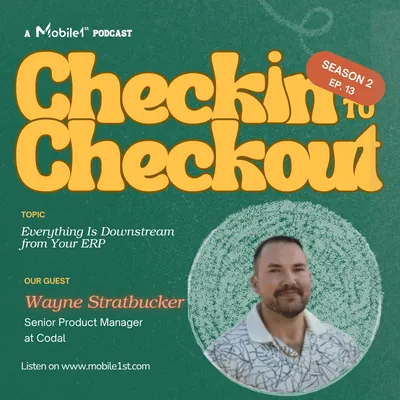
Ep. 13: Everything Is Downstream from Your ERP - Wayne Stratbucker
Wayne Stratbucker has seen both sides of the omnichannel equation. He's helped brands sell on Amazon, Walmart, TikTok Shop, and Instagram. In this episode, he breaks down why the brands winning right now are the ones who got their backend right first.